
Skin reactions are rarely random.
Skin flare-ups can feel unpredictable. One day your skin feels comfortable and balanced. The next, it’s dry, itchy, red, irritated, or suddenly reacting to products you’ve used for months.
But skin reactions are rarely random.
In Ayurveda, your skin is not viewed as a separate organ. It reflects what’s happening throughout your body. Digestion, sleep, stress, emotions, daily habits, seasonal changes, and your current doshic balance can all influence how your skin behaves.
Modern dermatology is beginning to connect many of these same dots. Research on the gut-skin axis, psychodermatology, neuroimmunology, and the skin barrier all point to the same idea: your skin is connected to the rest of your body.
If you have eczema, sensitive skin, or another inflammatory skin condition, learning your triggers can help you recognize patterns, reduce flare-ups, and know when your body is moving out of balance.
The goal isn’t simply to identify what triggered your skin. It’s also to understand why your skin responded to that trigger.
Common skin triggers to watch for
When people experience a flare-up, it is natural to look for one thing to blame. Sometimes there is a clear trigger. However, many flare-ups happen because several smaller stressors occur together.
For example:
- Cold weather may dry the skin.
- Stress may increase inflammation.
- Poor sleep may reduce your skin’s ability to recover.
- A new active ingredient may become irritating.
Individually, each factor may be manageable. Together, they may push already-sensitive skin into a flare. And understanding the patterns is useful in managing skin balance.
Ayurveda teaches that health is a constant balancing act. Factors such as season, diet, sleep, emotions, digestion, and daily habits are all considered part of the picture.
And it looks at not only what caused the flare-up, but also what changed that allowed it to happen. This kind of thinking can help you spot patterns you may have otherwise missed.
Signs of skin imbalance
Factors that may trigger your skin
Weather, seasons, and environmental changes
Your skin is constantly adjusting to the world around it. As seasons change, so should your routine to help maintain balance. Ayurveda calls it ritucharya, or seasonal routine.
Ayurveda encourages us to pay attention to these changes instead of expecting our bodies to respond the same way all year long. As the qualities of each season change, our routines, food, and skincare should change with them.
Instead of asking, “Why is my skin suddenly acting up?” Ayurveda asks a different question: “What changed in my environment that may have affected my balance?”
Cold, dry, and windy weather can aggravate vata dosha. On the skin, that often looks like dryness, rough texture, increased sensitivity, or skin that simply feels depleted.
Hot weather can aggravate pitta dosha. You may notice more redness, warmth, irritation, or patches that seem to spread more easily.
Heavy, damp weather can aggravate kapha dosha. Skin may become oilier, more congested, or develop deeper breakouts.
Sometimes it is not winter or summer that may cause problems. It is the transition between them. Spring and fall bring changes in temperature, humidity, pollen, daylight, and wind. Your skin needs time to adjust.
Modern research shares similar findings. Cold, dry weather increases water loss from the skin, making it easier for skin to become dry and irritated. Heat can increase sweating, friction, and inflammation. Many people also notice flare-ups when the seasons change as the skin adjusts to a new environment.
The weather outside doesn’t affect everyone the same way. Your skin’s response depends on what’s happening inside your body, too. For example, someone with eczema may notice dry, rough patches worsen during cold winter weather as vata qualities increase. Another person may experience red, warm, irritated patches during hot weather due to increased pitta.
But your skin responds to more than the weather forecast. Indoor heating removes moisture from the air. Air conditioning can dry the skin. Smoke, pollution, dust, chlorine, and seasonal allergens may all contribute to irritation in people with sensitive skin.
Ayurveda looks at your entire environment instead of focusing only on skincare products. Sometimes changing your surroundings can be just as important as your skincare routine.
Learn more about wheather, seasonal, and environmental skin triggers on our blog.
Pay attention:
- Does your skin flare during certain seasons?
- Does cold, heat, wind, or humidity consistently affect your skin?
- Does your skin change when you travel or spend more time outdoors?
Stress, emotional health, and the skin
Ayurveda has always viewed the mind, body, and consciousness as interconnected. At Red Pantz, we call this connected health.
Chronic stress and excessive mental activity can aggravate vata dosha. Anger, frustration, and irritability can aggravate pitta. Feelings of heaviness, stagnation, or lack of motivation may reflect kapha imbalance.
Modern science supports this connection. Your skin and nervous system both develop from the same embryonic tissue and continue to communicate throughout life. Psychological stress can slow skin barrier recovery and increase inflammation, helping explain why eczema, psoriasis, acne, and rosacea often flare during stressful periods.
- Do flare-ups happen during stressful periods?
- Does your skin improve when you feel more rested or relaxed?
- Are there certain emotions, such as worry, frustration, or anger, that seem to show up on your skin?
Lack of sleep and skin recovery
Ayurveda considers sleep one of the three pillars of health. During sleep is when the body’s restorative and repair processes kick in, including your skin.
Just like your entire body, your skin follows a circadian rhythm, with many repair processes increasing at night. Poor sleep has also been linked to impaired skin barrier function and slower recovery from everyday stress.
If you’ve had several restless nights, your skin may look dull, dry, tired, or more reactive than usual.
From an Ayurvedic perspective, lack of sleep aggravates vata, which can leave the skin feeling depleted, dry, and less resilient.
- Does your skin look or feel different after several nights of poor sleep?
- Do flare-ups happen more often when you’re tired or run down?
- Does your skin recover more slowly when you aren’t getting enough rest?
Diet, digestion, and the gut-skin connection
Ayurveda teaches that digestion is about more than breaking down food. It’s about what your body can digest, absorb, assimilate, and eliminate.
When digestion is strong, the tissues, including the skin, receive proper nourishment. When it’s not, ama, or improperly/undigested food particles, accumulates, leading to imbalance.
Modern research is beginning to connect similar ideas through the gut-skin axis. The gut microbiome, immune system, and inflammatory pathways all influence skin health.
That doesn’t mean everyone with eczema has food triggers. But it does mean it’s worth paying attention to patterns.
- Does your skin change after certain foods?
- Do digestive issues show up around the same time as a flare?
- Does your skin change when your eating habits change?
Sometimes your skin is telling you something your digestive system already knows.
Skincare products and ingredients
The right product for one person can be the wrong product for another. That’s especially true if you have eczema or a damaged skin barrier. When the barrier is compromised, ingredients that normally wouldn’t bother you may suddenly sting or cause irritation.
Common triggers include:
- Fragrance
- Harsh cleansers
- Over-exfoliation
- Too many active ingredients
- Products that no longer match your skin’s needs
Ayurveda takes a personalized approach. A routine that works when your skin is balanced may be too stimulating during periods of dryness, irritation, stress, or seasonal change.
Dry, rough skin often benefits from more nourishing care. Red, inflamed skin may need cooling support. Congested, oily skin usually responds better to lighter, clarifying routines.
Research also shows that eczema-prone skin often has a weaker skin barrier, making it more vulnerable to irritation.
The goal isn’t to use more products. It’s to use the right products for what your skin needs today.
- Did you recently start a new product or active ingredient?
- Are you using more products than your skin really needs?
- Does your skin sting, burn, or feel tighter (not in a good way) after applying certain products?
Hormonal changes
Hormones affect oil production, inflammation, skin hydration, and even how sensitive your skin feels. That’s why your skin may change during menstruation, pregnancy, perimenopause, menopause, or periods of ongoing stress.
Ayurveda looks at these changes through the lens of balance rather than hormones alone.
More heat and inflammation may point to pitta aggravation. Increased dryness may reflect vata aggravation. More oiliness or congestion may be linked to kapha aggravation. And as you reach menopause, the vata stage in life, the air and space elements in your body will naturally increase. This may be one of the reasons for more dryness and dullness in skin complexion.
Modern research also shows that hormonal shifts influence skin function in different ways throughout life.
The same life stage can look very different from one person to the next.
Pay attention:
- Do flare-ups happen around your menstrual cycle?
- Has your skin changed during pregnancy, perimenopause, or menopause?
- Do periods of hormonal change affect your skin in predictable ways?
How to identify your personal triggers
Finding your triggers is about learning your patterns. When a flare happens, look back over the previous few days—and maybe even beyond.
Pay attention:
- Did the weather change?
- Was I under more stress than usual?
- How did I sleep?
- Did I start a new product?
- Did I eat differently?
- Was I traveling or getting sick?
Change one thing at a time whenever possible. Otherwise, it’s hard to know what helped and what didn’t.
Also pay attention to your skin’s early warning signs. Tightness, mild itching, increased dryness, redness, or products suddenly starting to sting are often signs that your skin is moving out of balance.
Ayurveda teaches that imbalance rarely appears overnight. Doshas accumulate first, then get aggravated if you don’t pacify them. The body usually gives subtle clues first. The sooner you notice them, the easier they are to address.
Returning your skin to balance
Avoiding triggers is only part of the picture. The other part is helping your skin return to balance.
Sometimes that means simplifying your skincare routine or giving your skin barrier time to recover. Sometimes it means looking beyond your skincare products and asking whether stress, poor sleep, digestion, seasonal changes, or daily habits are also contributing.
Ayurveda has always taken this mind-body approach. Instead of treating the skin as an isolated organ, it asks what changed in the body that allowed the skin to become imbalanced in the first place.
Modern dermatology and Ayurveda use different language, but they share an important idea: healthy skin is influenced by far more than what you put on it.
The more familiar you become with your own patterns, the easier it becomes to support your skin before a small imbalance turns into a larger flare-up.
Gentle skincare, even for sensitive skin
Our skincare story started because of eczema and sensitive skin and a lifelong exploration of triggers. And that’s why we share the Ayurvedic philosophy that everything is connected.
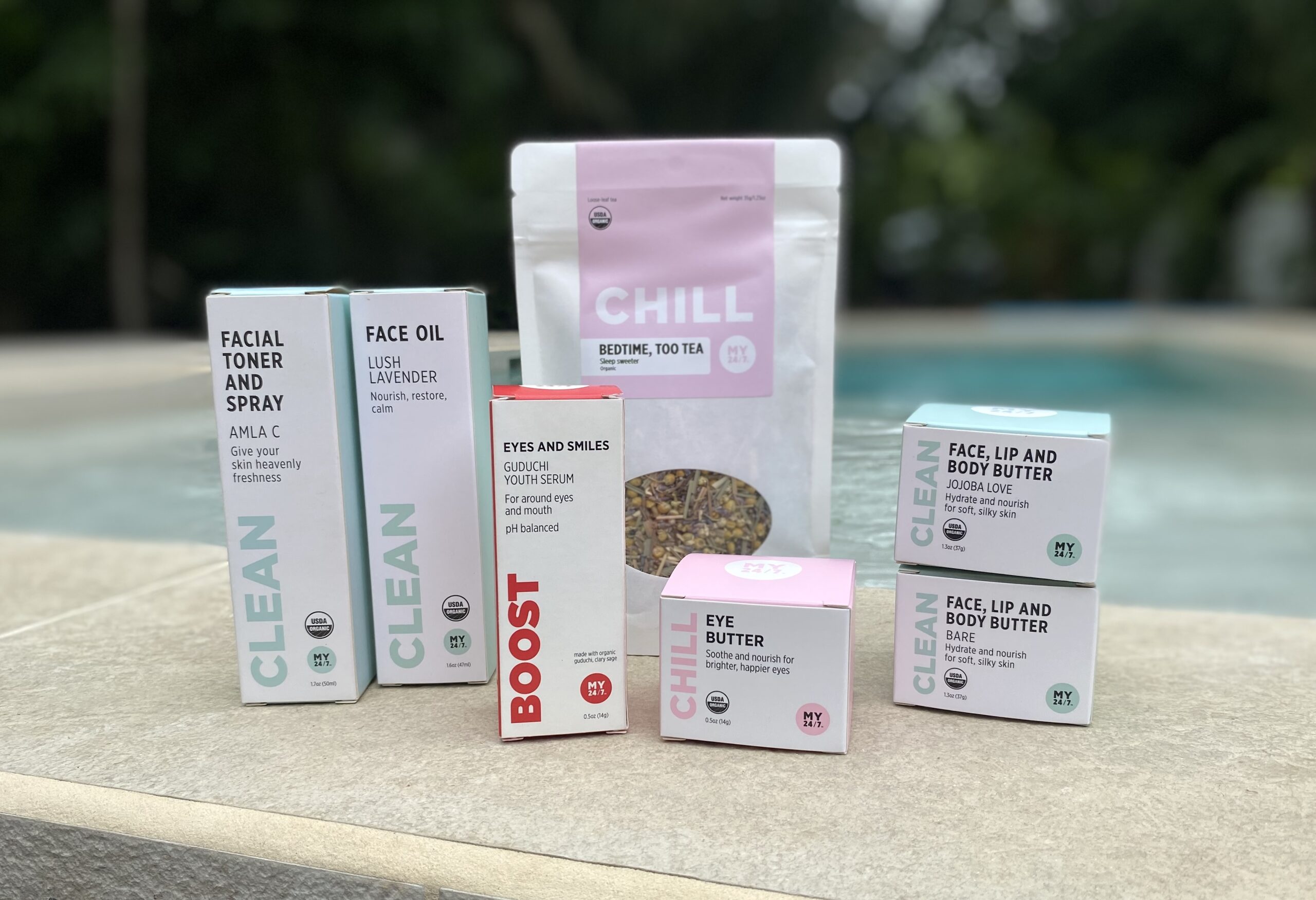
The MY24/7 by Red Pantz USDA-certified organic skincare and specialty tea collection was designed to support skin and overall health through topical applications as well as lifestyle and digestion aids.
Explore the glossary for deeper definitions:
https://redpantz.com/glossary/
Certified organic skincare | Organic skincare | More than clean beauty | Antioxidants
EXPLORE
GET IN TOUCH
KEEP CONNECTED
This site is protected by reCAPTCHA and the Google Privacy Policy and Terms of Service apply.